Utility Lines Installed Without Guesswork or Damage
Underground Services in Dandridge for electric, water, and sewer line excavation during new installations
Utility lines fail or never function correctly when trenching misses required depth, slopes water lines incorrectly, or damages existing infrastructure buried nearby. Galloway Excavation performs residential underground utility excavation in Dandridge, handling electric, water, and sewer line trenching with the accuracy new installations require to pass inspection and operate reliably for decades. The licensed and insured LLC brings nearly 30 years of experience to projects where hitting an unmarked gas line or installing sewer pipe at the wrong grade creates expensive repairs and project delays that cascade through every trade waiting to follow.
Excavation for residential utilities involves more than digging a straight trench—it requires coordinating with utility locate services, maintaining proper depth throughout the run, ensuring sewer lines slope at least one-quarter inch per foot for gravity flow, and backfilling trenches in compacted layers that prevent settling under driveways or foundation edges. Each utility type has different depth requirements and bedding material specifications that affect long-term performance.
Schedule an on-site evaluation to review utility routing, depth requirements, and coordination with your contractor's installation timeline.
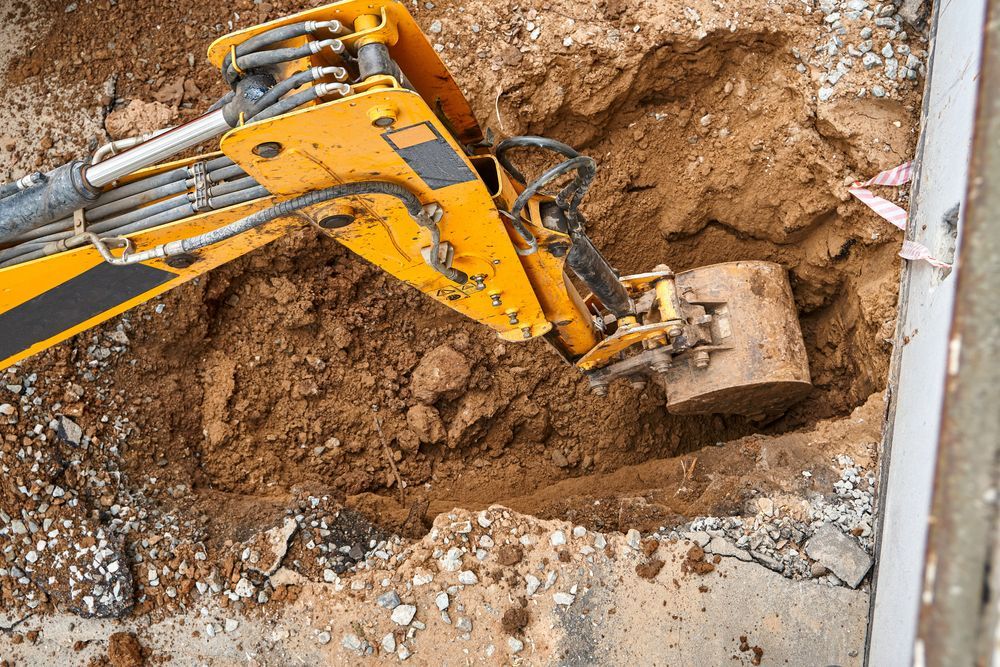
Safe and accurate trenching creates the space and conditions utility lines need to function correctly and remain accessible for future maintenance. Electric conduit requires specific depth depending on voltage and whether it runs under driveways, water lines need consistent slope and proper bedding to prevent joint failure, and sewer lines demand precise grade calculations so waste flows reliably without low spots where solids accumulate and cause backups.
Once trenching is complete and utilities are installed, you'll see smooth backfilled surfaces that settle evenly rather than creating depressions across your yard or driveway. Utilities function as designed because trenches were excavated to correct specifications—water pressure remains consistent, electrical service connects safely, and sewer lines drain completely without recurring clogs from improper slope. Inspections pass without requiring expensive re-excavation to fix depth or grade problems that could have been avoided with accurate initial trenching.
Underground services include trench excavation, depth verification, and backfilling with proper compaction. The service does not include utility line installation itself, connection to existing systems, or final grading and landscaping restoration—those tasks remain with your plumber, electrician, or site contractor depending on the utility type involved.
Common Questions About Utility Excavation
Property owners in Dandridge preparing for new utility installations often ask similar questions about excavation depth, coordination with other trades, and what happens during the trenching process. These answers clarify what to expect.
What happens during the initial site evaluation?
The excavation contractor reviews utility routing plans, identifies existing infrastructure that must be avoided, evaluates soil conditions and access constraints, and confirms depth requirements based on local code and utility type.
How deep do trenches need to be for different utilities?
Electric lines typically require 18 to 24 inches depending on voltage and whether conduit runs under paved surfaces, water lines need sufficient depth to stay below frost line, and sewer lines vary based on connection point elevation and required slope to reach the main or septic system.
When does excavation happen relative to utility installation?
Trenching occurs immediately before the utility contractor installs lines—waiting too long allows trenches to fill with water or collapse, while excavating too early creates scheduling gaps where open trenches become safety hazards.
What soil conditions in Dandridge affect trenching?
Rocky soil common in East Tennessee requires specialized equipment and slows progress compared to softer material, while clay soil holds trench walls better but compacts poorly during backfilling unless moisture content is managed correctly.
How is existing underground infrastructure protected during excavation?
Utility locates mark approximate positions of existing lines, and careful hand-digging or vacuum excavation exposes exact locations near marked areas before mechanical trenching continues, preventing strikes that cause service interruptions and expensive emergency repairs.
Galloway Excavation brings experienced residential utility trenching to projects where accuracy prevents costly corrections and delays. Contact the service to discuss your utility installation requirements, site conditions, and coordination with other contractors involved in your project.