
Foundation Pads Built for Structural Stability
House Seats in Dandridge for new home construction requiring excavation and grading for footers and basement foundations
A house seat is the excavated and graded pad where a home's foundation is built—it must be level, compacted, and shaped to provide stable support for footer and foundation walls while directing water away from the structure. Galloway Excavation prepares house seats throughout Dandridge by excavating to the depth required for basement foundations or footer placement, removing unstable soil layers, and grading the pad to precise elevations that match architectural plans. The process creates a solid, level building surface that prevents differential settling and provides a stable base for long-term structural integrity. These house seats serve homeowners beginning new construction on properties where accurate site preparation directly affects the quality and longevity of the finished home.
House seat excavation is not simply digging a hole—it involves cutting to specific depths based on foundation design, removing organic material and soft soils that would compress under structural loads, and shaping the pad to ensure footer forms sit level and plumb. The excavation must account for drainage by sloping the finished grade away from the foundation perimeter, and the pad surface must be compacted to prevent settling after the foundation is poured.
Request an on-site consultation to review your building plans and determine the excavation depth, grading requirements, and site preparation steps needed for your foundation.
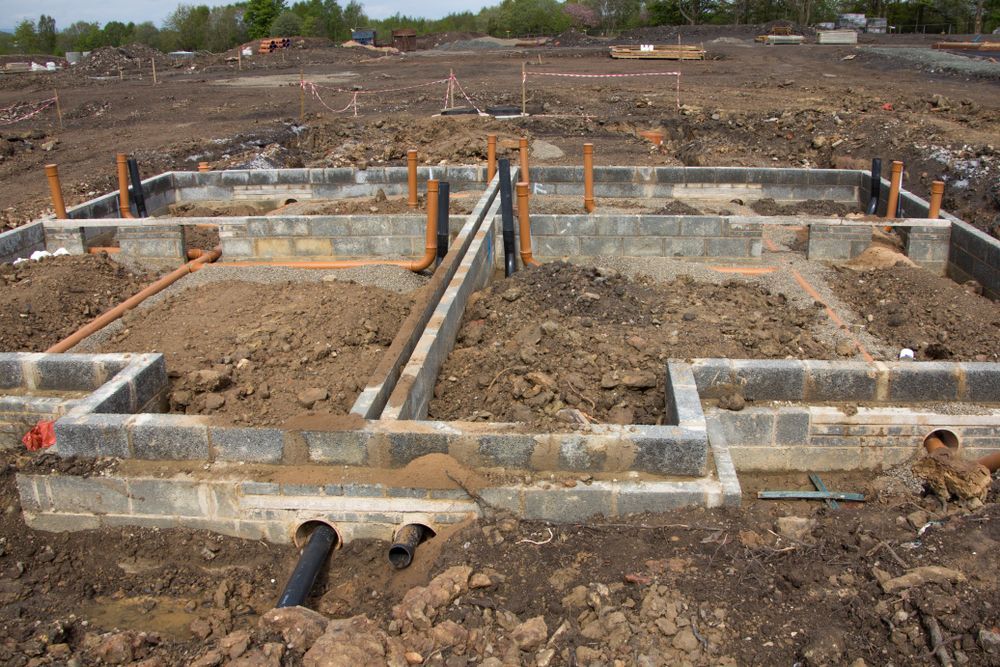
Excavation begins by marking the building footprint based on architectural plans and property surveys, then removing soil to the required depth for basement floors or footer placement. The excavator cuts to precise elevations, checking grade with instruments to ensure the pad is level across its entire surface. Soil removed during excavation is stockpiled on-site if it will be used for backfill around the foundation, or hauled away if excess material is not needed for final grading.
After excavation is complete, the house seat provides a level, compacted surface where footer forms can be set and foundation walls can be built without adjustment or shimming. The pad's perimeter slopes away from the building area to direct surface water outward, preventing pooling around the foundation during construction and after the home is finished. The excavation depth matches the foundation design, whether that involves a full basement, crawlspace, or slab-on-grade construction, and the pad dimensions provide adequate working space for forming and pouring concrete.
House seat preparation includes excavation to the specified depth, grading to establish level and drainage, and compaction to stabilize the pad surface. It does not include footer or foundation construction, which are completed by concrete contractors after the excavation is finished and inspected. Galloway Excavation is a licensed and insured LLC with over two million dollars in coverage, providing liability protection throughout the site preparation process.
What Homeowners Often Want to Know
Homeowners planning new construction typically need clarity on how house seat preparation fits into the building timeline and what site conditions affect the excavation process.
How deep does the excavation go for a typical house seat?
The depth depends on the foundation type—a full basement requires excavation eight to nine feet below finished grade to accommodate foundation walls and a concrete floor, while a crawlspace foundation may need only two to three feet of excavation below the planned first-floor elevation.
What happens if unstable soil is encountered during excavation?
If soft clay, organic material, or loose fill is found below the planned pad elevation, it must be removed and replaced with compacted structural fill to prevent settling—this is determined during excavation and addressed before grading is completed.
How is the pad graded to prevent water from pooling around the foundation?
The pad surface is sloped away from the building footprint at a slight grade, typically one to two percent, so that rainwater flows outward toward natural drainage areas or installed systems rather than collecting against the foundation perimeter.
What site preparation should be completed before house seat excavation begins?
The building lot should be cleared of trees, stumps, and vegetation within the construction area, and the property should be surveyed to establish accurate building corners and elevation benchmarks that guide the excavation depth and pad dimensions in East Tennessee's variable terrain.
How long does house seat excavation take for a typical residential foundation?
Most house seats are excavated and graded within one to three days depending on the foundation size, soil conditions, and whether a basement or crawlspace is planned, though wet weather or rock encountered during excavation can extend the timeline.
Galloway Excavation provides nearly 30 years of residential excavation experience, with every project completed by the owner to ensure precision and attention to detail. Free estimates are available and remain valid for three months, allowing you to coordinate site preparation with your construction schedule. Contact the office to discuss your building plans and arrange a property assessment for house seat excavation.